
 By Treavor English
What happened
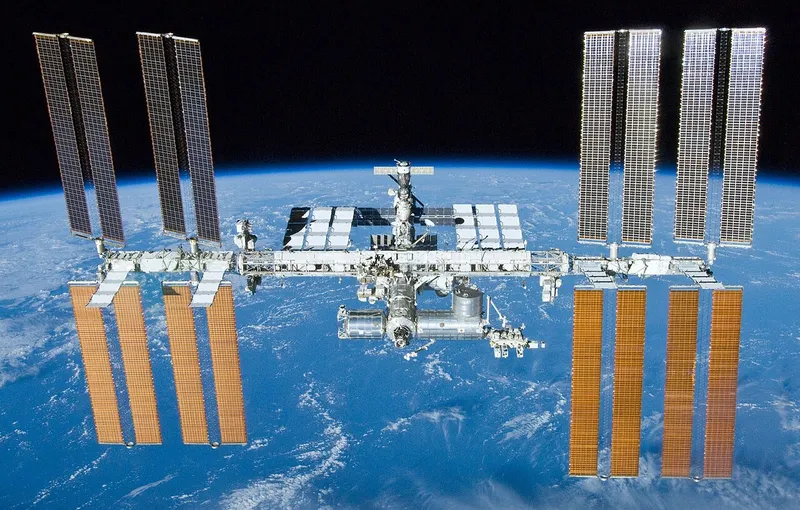
The International Space Station is supposed to retire in 2030. NASA is asking companies to provide the places astronauts will use afterward. The dangerous space in that plan is the gap between a retirement date and a replacement that can actually take a crew.
On October 9, NASA invited industry proposals for commercial stations, with submissions due December 8. Awards are expected in spring 2027. The call moves the buying process forward, while leaving years of building, testing and approval between a proposal and a working destination.
The Government Accountability Office, which examines federal programs for Congress, warned in June that the new destinations might not arrive in time. Its concern is continuity: the ability to keep crews and research in low-Earth orbit through the transition.
Two calendars have to meet
The watchdog identified 2027 as a decision point. NASA needs to assess whether a commercial station will be ready before the ISS retires and examine alternatives if it will not. Those decisions require enough time to secure resources and make the alternative workable.
The report’s examination of past development efforts suggested projects could take longer than NASA’s schedule allowed. Its recommendations predate October’s final request for proposals. They establish the planning risk behind the new procurement, rather than a verdict on every detail of that later document.
What the government is buying
Under the commercial approach, companies would design, build, test, certify and operate destinations. NASA would become a customer of services, with companies also seeking other customers. The plan therefore depends on technical execution and a business model that can support an operating station.
The distinction matters to the research as well as to astronauts. An experiment needs the appropriate equipment and conditions when the work is scheduled. A service that opens late can disrupt a program even if its developers eventually deliver something impressive.
Extending the old station is a decision too
The auditors say extending ISS operations beyond 2030 should be considered if needed. They also identify budget implications. An extension would require planning and resources; it cannot be treated as a free reserve option that will arrange itself if the replacements slip.
NASA has to compare the risks and costs of the available paths while decisions can still change the outcome. Waiting for certainty can consume the time needed to act on an alternative. That is why a 2027 assessment matters to a transition several years later.
The next milestones are concrete: proposals in December, expected awards in spring and the agency’s readiness decisions. Companies’ target dates belong beside evidence of hardware, testing and progress toward the approvals needed for actual use.
The retirement date and the replacement schedule have to meet. NASA’s 2027 readiness assessment is a chance to act before a gap opens.
Sources & reporting notes
- NASA Seeks US Industry Plans for Commercial Space Stations
NASA · 2026-10-09
Reporting note
Final solicitation, proposal deadline and expected award timing.
Release 26-086
- Low-Earth Orbit: NASA Faces Impending Decisions for Replacing International Space Station with Commercial Stations
U.S. Government Accountability Office · 2026-06-17
Reporting note
Earlier audit’s readiness risks, 2030 retirement plan and 2027 decision point.
What GAO Found; Recommendations
- NASA issues long-awaited call to industry for private space stations
Ars Technica · Eric Berger · 2026-10-09
Reporting note
Independent specialist reporting on the request and industry response.
Linked report; syndication hosts retain the original newsroom attribution.
- NASA is decommissioning the ISS. It’s asking businesses to take its place in space
Houston Public Media · Michael Adkison, via KWBU · 2026-10-12
Reporting note
Independent public-media reporting on the replacement effort; syndicated by KWBU.
Linked report; syndication hosts retain the original newsroom attribution.
AI assisted with research, drafting and editing. Read our ethics & AI-use policy.
Story details
- Event
- October 9 solicitation; June 17 audit as background
- Published
- October 20, 2026 at 12:00 AM EDT
- Sources checked
- Oct 20, 2026
- Updated
- October 21, 2026 at 12:00 AM EDT
The story, Treavslated
Source records checked October 20, 2026
How this story was made
Prepared with AI assistance using the linked records and independently published reporting. No interviews or field reporting were conducted. Worked examples and explanatory analogies are identified; editorial judgments appear separately as commentary. Wire-service syndication is counted as one newsroom, regardless of the host.
Corrections and updates
- 2026-10-20 Reworked the headline, introduction and reading guidance to explain the story for readers without prior background. Underlying source records retained.
- 2026-10-20 Expanded the explanation, added independent newsroom coverage with event/background distinctions, and retained the original source record. Illustrative examples are labeled.
- 2026-10-20 Reworked the headline and explanation in the owner’s Hardcore News voice; expanded context, mechanisms and practical consequences, with source links preserved and supplemented. Original event and publication dates retained.
- 2026-10-20 Readability revision: shortened and clarified the explanation, consolidated repeated caveats, and added a practical Bottom line. Headlines, figures, quotations, original publication dates and source links preserved.
- 2026-10-21 Editorial revision: published the recovered rewrite, revised headline and summary, clarified numerical examples, and removed repetitive framing. Source records and original publication date retained.
- 2026-10-21 Editorial repair: removed repeated explanations and unnecessary framing so the reporting advances. Preserved the remaining factual claims, source records, material qualifications and original publication date. This copy edit does not claim new reporting or independent verification.
Comments
No comments yet.